Amir Coleman · 17 November 2026
Rising Student Numbers Spur Fallsridge Schools and Businesses to Launch Joint After-Hours Initiatives
Data from the Fallsridge School District shows enrollment climbed 18 percent between 2023 and 2026, pushing classroom capacity limits and prompting administrators to seek partners outside traditional school hours, according to district reports released in early November 2026.
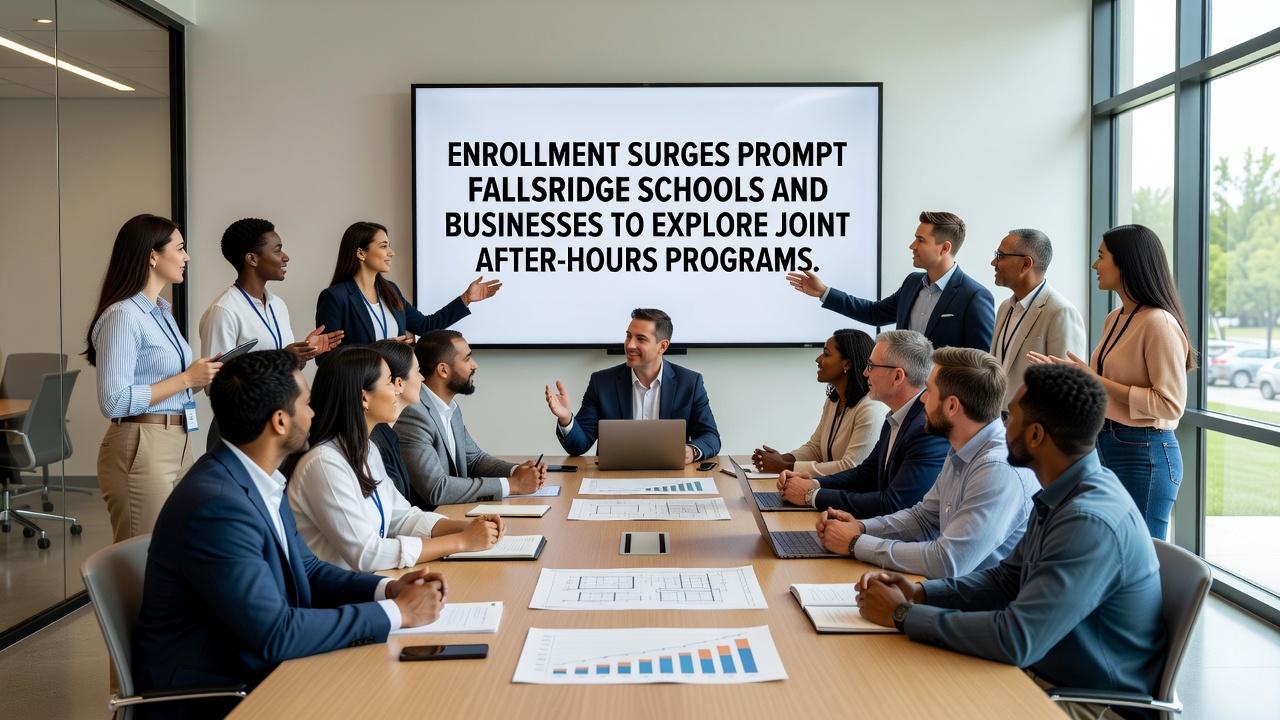
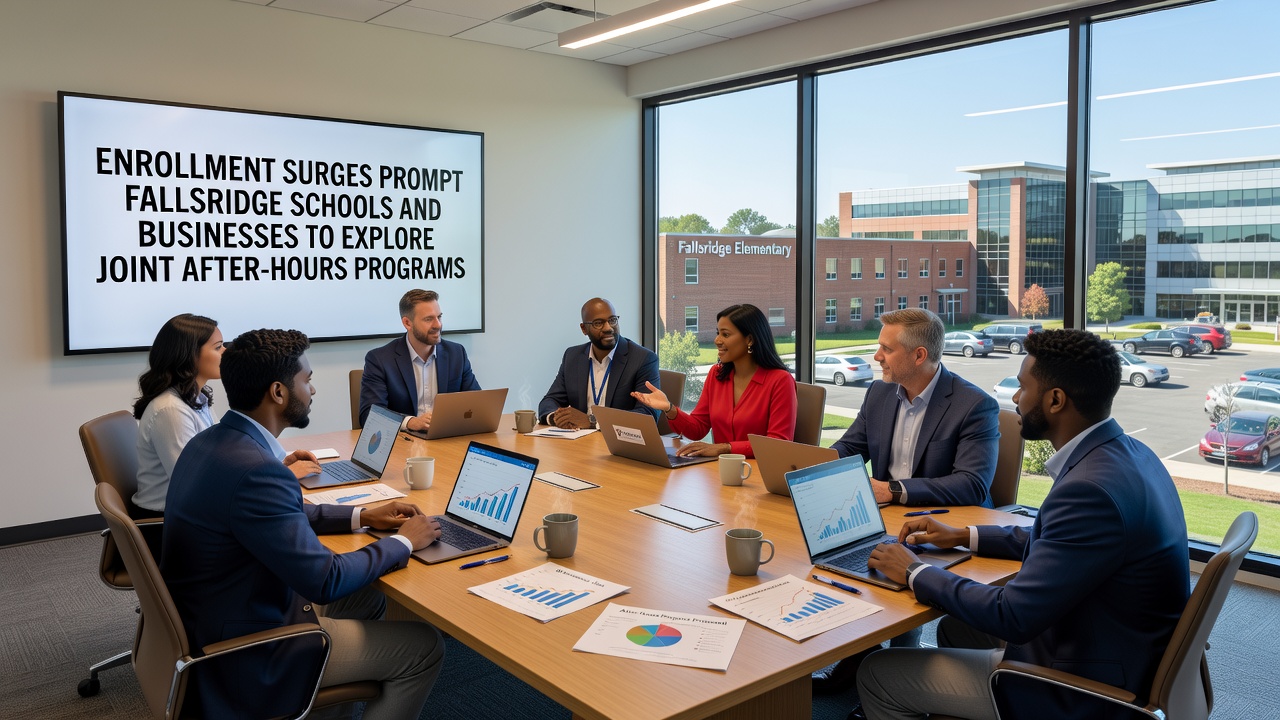
School leaders met with representatives from local retail, technology, and service firms in October to map out shared spaces for tutoring, skill workshops, and supervised study sessions that run from 4 p.m. to 8 p.m. on weekdays. The conversations focus on underused storefronts and office conference rooms that sit empty after standard business closing times.
Enrollment Data Drives Planning
Figures released by the district indicate kindergarten through fifth-grade numbers rose fastest, adding 420 students since the 2024-2025 school year, while middle and high school counts grew by 310. Those totals pushed several buildings past 95 percent capacity during core instructional periods, leaving little room for after-school clubs or extended learning without new arrangements.
Business owners report similar space availability in the evenings. A downtown co-working hub already hosts two pilot coding sessions for high schoolers three nights a week, and a nearby hardware store converted part of its warehouse into a makerspace for middle school science projects on Tuesdays and Thursdays.
Program Structure Takes Shape
Joint planning documents outline three program tracks: academic support in core subjects, career exploration modules led by local employers, and recreational activities that emphasize physical movement and creative arts. Each track runs for eight-week cycles, with transportation provided by the district using existing bus routes extended into the evening.
Training for business volunteers began in late October 2026 and covers basic classroom management, child safety protocols, and reporting procedures required under state education guidelines. District staff conduct bi-weekly check-ins at each site to monitor participation and adjust schedules as needed.
Funding and Logistics
The district allocated $185,000 from its current operating budget for staffing, materials, and minor facility modifications, while participating businesses contribute in-kind space and equipment. Additional grants from regional workforce development boards cover transportation fuel and background-check processing for volunteers. A shared online portal allows parents to register students and view daily attendance records.
Early registration data collected in the first week of November shows 312 students signed up across the initial eight sites, with demand highest for the career exploration track. District analysts project that number could reach 500 by the end of the month once word spreads through parent networks and school newsletters.
Community Partners Expand Reach
Local employers involved include a software firm that supplies laptops for digital literacy sessions, a bakery offering food-service certification workshops, and a medical clinic providing basic first-aid training. Each partner commits at least one staff member two evenings per week and receives feedback summaries from participating students at the end of each cycle.
Observers note that similar collaborations in other districts have sustained participation rates above 70 percent when businesses remain actively engaged rather than simply donating space. Fallsridge organizers adopted that lesson by requiring partners to lead at least one activity per week instead of only hosting events.
Next Steps and Evaluation
A formal review is scheduled for February 2027 to assess academic outcomes, attendance consistency, and partner satisfaction. Metrics include pre- and post-program test scores in targeted subjects, student self-reported engagement levels, and business feedback on operational impact. Results will guide decisions about expanding the model to additional neighborhoods or adjusting program hours.
State education department guidelines require annual reporting on any shared-facility arrangements, and district officials have already submitted preliminary documentation for the current pilot. The process ensures compliance with safety standards and equitable access rules that apply to all after-school programming.
Conclusion
Enrollment pressures have led Fallsridge schools and local businesses to coordinate after-hours programming that uses existing community spaces for structured student activities. Data collected through November 2026 shows initial uptake, while planning documents outline clear tracks, funding streams, and evaluation timelines. The approach connects available evening resources with documented student needs without requiring new construction or permanent schedule changes.