Gisela Krüger · 6 October 2026
Fallsridge Volunteer Networks Expand Capacity for Growing Environmental Initiatives
Volunteer organizations across Fallsridge have scaled operations since early 2025 as requests for habitat restoration, water quality monitoring, and urban greening projects continue to climb, according to local coordination records. Groups that once managed two or three events per quarter now schedule weekly activities while recruiting additional participants through digital platforms and community partnerships. Data collected by regional environmental offices show participation numbers rose 47 percent between January and September 2026, driven by increased funding availability and public interest in local conservation work.
Coordination Challenges and New Structures
Leaders within these networks report that traditional sign-up sheets and email lists no longer handle the volume of inquiries, so several organizations implemented shared scheduling software and centralized training modules. One coordinator noted that training sessions now run twice monthly instead of quarterly, covering topics such as invasive species identification, erosion control techniques, and safety protocols for working near waterways. These adjustments allow volunteers to move between projects without repeating basic orientation each time.
Local agencies have observed that demand spikes often coincide with grant cycles, particularly when federal and state programs release funds for watershed improvement. In October 2026, three new restoration sites opened after approvals from the U.S. Environmental Protection Agency and matching contributions from regional foundations, requiring an estimated 1,200 volunteer hours over the following six weeks. Networks responded by creating tiered leadership roles where experienced volunteers supervise smaller teams on specific tasks.
Training Programs and Resource Sharing
Training programs now incorporate modules developed in partnership with academic institutions, including field methods outlined in reports from the Australian Department of Climate Change, Energy, the Environment and Water. Participants learn standardized data collection techniques that feed into larger databases used by both municipal planners and university researchers. Equipment pools have expanded as well, with shared inventories of tools, gloves, and safety gear tracked through an online system that reduces duplication across groups.
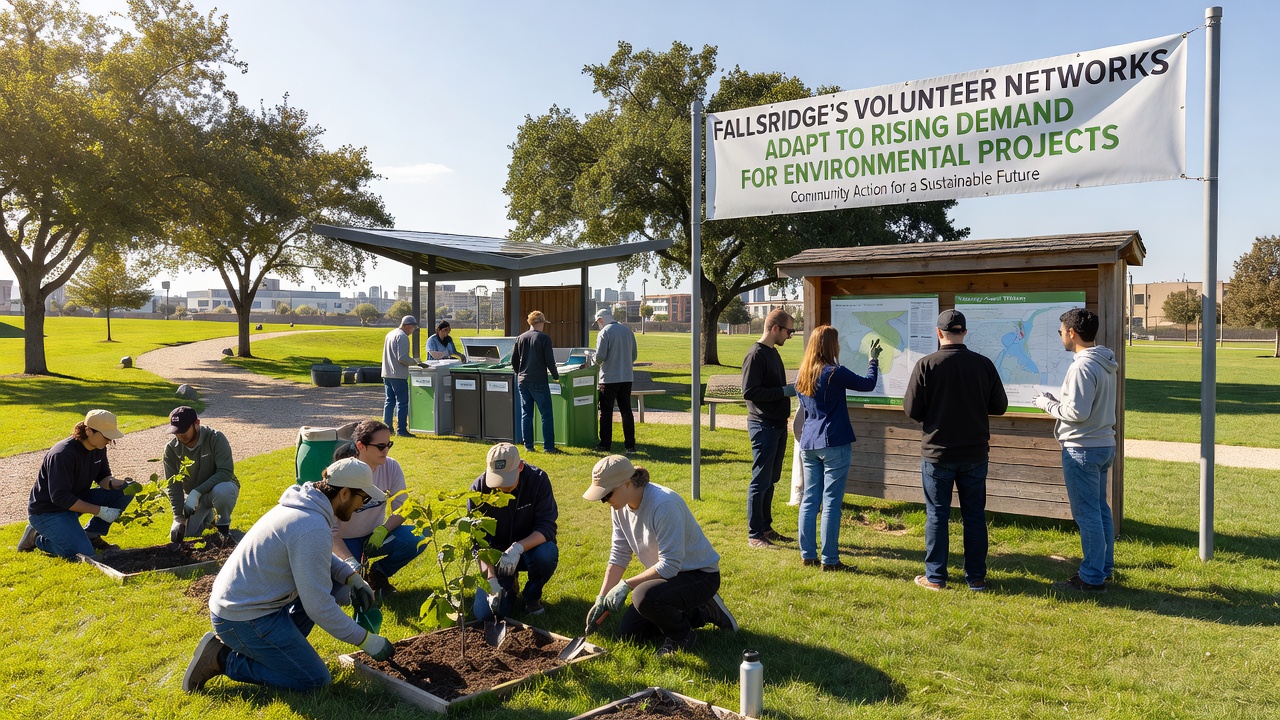
Figures from the Canadian Wildlife Service indicate similar volunteer surges in comparable mid-sized communities, where networks that adopted digital coordination tools maintained higher retention rates than those relying solely on paper records. Fallsridge groups have mirrored this approach by hosting joint workshops that introduce new members to multiple organizations at once, helping individuals find roles that match their availability and skill levels.
Project Types Driving Increased Participation
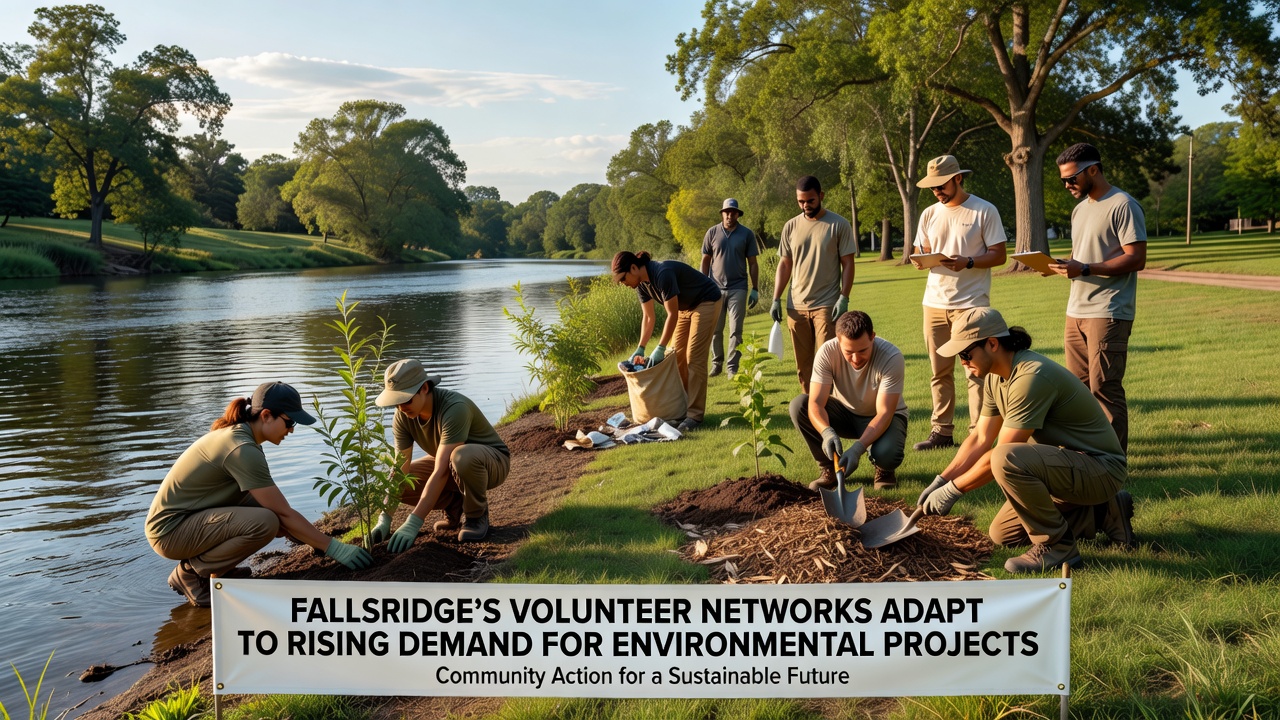
Restoration work along the main river corridor and smaller tributaries accounts for much of the current workload, while pollinator garden installations and tree-planting days draw families and student groups. Monitoring programs that track macroinvertebrate populations in local streams require consistent weekly visits, creating steady demand for trained observers. These recurring commitments have prompted networks to develop mentorship pairings so newer volunteers can accompany experienced members until they gain confidence in identification and recording procedures.
Community clean-up events scheduled for late October 2026 expect turnout exceeding previous years, according to preliminary registration data. Organizers coordinate with waste management services to ensure collected materials receive proper sorting and disposal, maintaining compliance with municipal regulations. Such events also serve as entry points for people exploring longer-term involvement.
Future Planning and Capacity Building
Planning documents circulated among network leaders emphasize the need for sustained recruitment alongside retention efforts. Strategies include outreach through schools, businesses, and faith communities, as well as recognition programs that highlight cumulative volunteer contributions. Data tracking software now logs hours and project outcomes, producing reports that support future grant applications and demonstrate measurable environmental impact.
Conclusion
Adaptations in scheduling, training, and resource management have enabled Fallsridge volunteer networks to absorb higher project volumes while preserving operational standards. Continued collaboration with government agencies, academic partners, and funding organizations supports ongoing expansion, allowing groups to address additional sites as demand persists into 2027 and beyond.